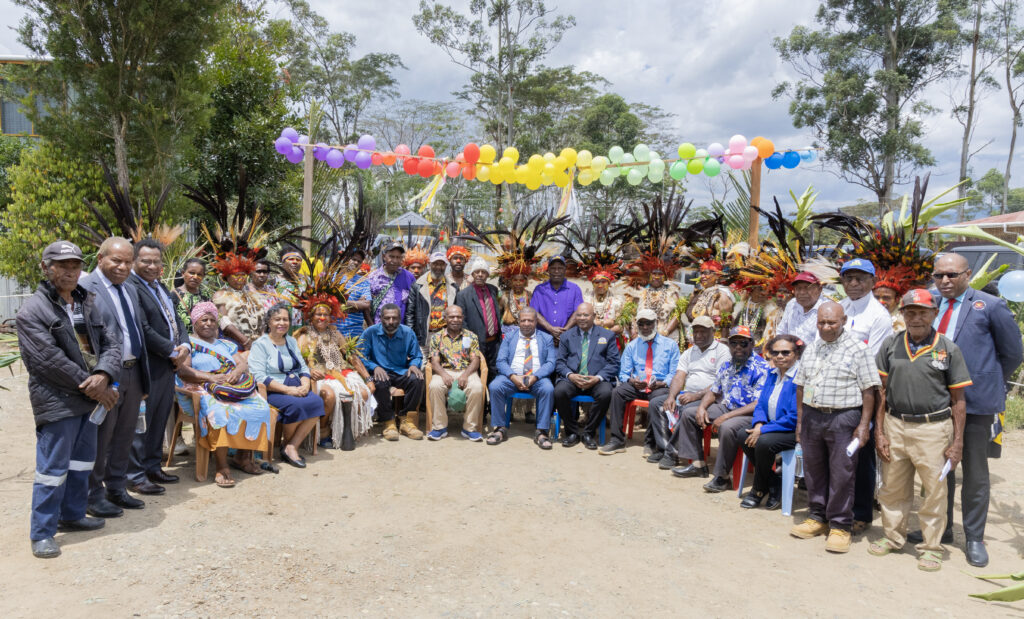
Jiwaka Province, 15 April 2026 – The Constitutional and Law Reform Commission (CLRC) commenced its two-week Custom Recording Exercise in Jiwaka Province, as part of its ongoing efforts to advance its special mandate in monitoring the development of the Underlying Law of Papua New Guinea.
Speaking at the official launching ceremony, CLRC Secretary, Dr. Mange Matui, emphasized the importance of the exercise and the Commission’s crucial role as mandated by law.
“This Custom Recording Exercise reflects our continued commitment to preserving our customs and advancing the development of a truly Melanesian jurisprudence,” he said.
He further added, “Beyond the Commission’s core mandate in law review and reform, CLRC has a special constitutional responsibility under the Underlying Law Act 2000 and the CLRC Act 2004, to monitor the development of the Underlying Law, and provide timely reports to Parliament on the relevance and application of its principles.”
Over the course of the two-week exercise, CLRC officers will engage with key village chiefs and tribal leaders to carefully document customary practices in their authentic form. The customs to be recorded will cover a broad range of areas, including land ownership, marriage, dispute resolution, criminal conduct, mediation processes, and other related matters.
Participants from the four major language groups within Jiwaka Province will be consulted. These include the Kuma Language Group from North Waghi District; the Narak Language Group from Jimi District; the Ekni Language Group from Anglimp South Waghi District; and the Melpa Language Group from Anglimp South Waghi District, bordering Western Highlands Province.
This extensive exercise follows six to eight months of strategic planning and coordination between CLRC and the Jiwaka Provincial Government, ensuring that participants are properly identified, vetted, and possess deep customary knowledge.
CLRC Chairman, Hon. Saki Soloma, reiterated the importance of the exercise, highlighting its relevance to the justice system.
“One of the key steps in fulfilling this special responsibility is the Custom Recording Exercise, where customs are carefully documented, verified, and preserved so they can be appropriately applied by the courts in addressing issues within our communities,” he said.
He further stated, “In time, Papua New Guinea will further incorporate customs into its legal system through the courts. This will ensure that customary laws – practised by our people from time immemorial – are formally recognised and given status alongside common law and equity.”
The Chairman also stressed that the initiative aligns with the National Goals and Directive Principles of Papua New Guinea.
“This program directly aligns with our nationhood aspirations, particularly the Fifth Goal – Papua New Guinean Ways – which calls for respect for customary laws and social structures, and encourages home-grown solutions rather than reliance on foreign systems,” he added.
Jiwaka Province is the second province selected by CLRC for the Custom Recording Exercise, following the successful completion of the program in Central Province in 2025. The Commission now holds comprehensive documentation of customs from Central Province and anticipates similar outcomes in Jiwaka.
The launching ceremony was attended by CLRC Commissioners, the Deputy Governor of Jiwaka Province, the Deputy Provincial Administrator, participants, members of the CLRC team, and locals from surrounding communities.
The Custom Recording Exercise in Jiwaka Province will commence on Thursday 16th April, 2026, and conclude on 1st May, 2026.
CLRC remains committed to its core mandate in law review and reform. Through this important program, the Commission ensures that its law reform efforts continue to reflect and uphold the customs and values of Papua New Guineans.